
Saskatoon Cycles June 2025 Newsletter
Bike Valet
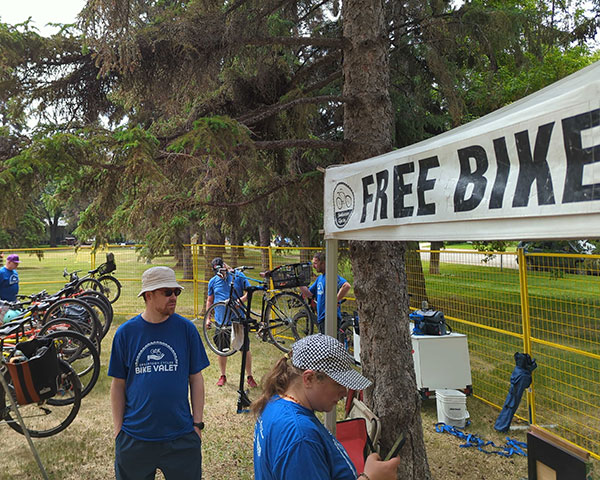
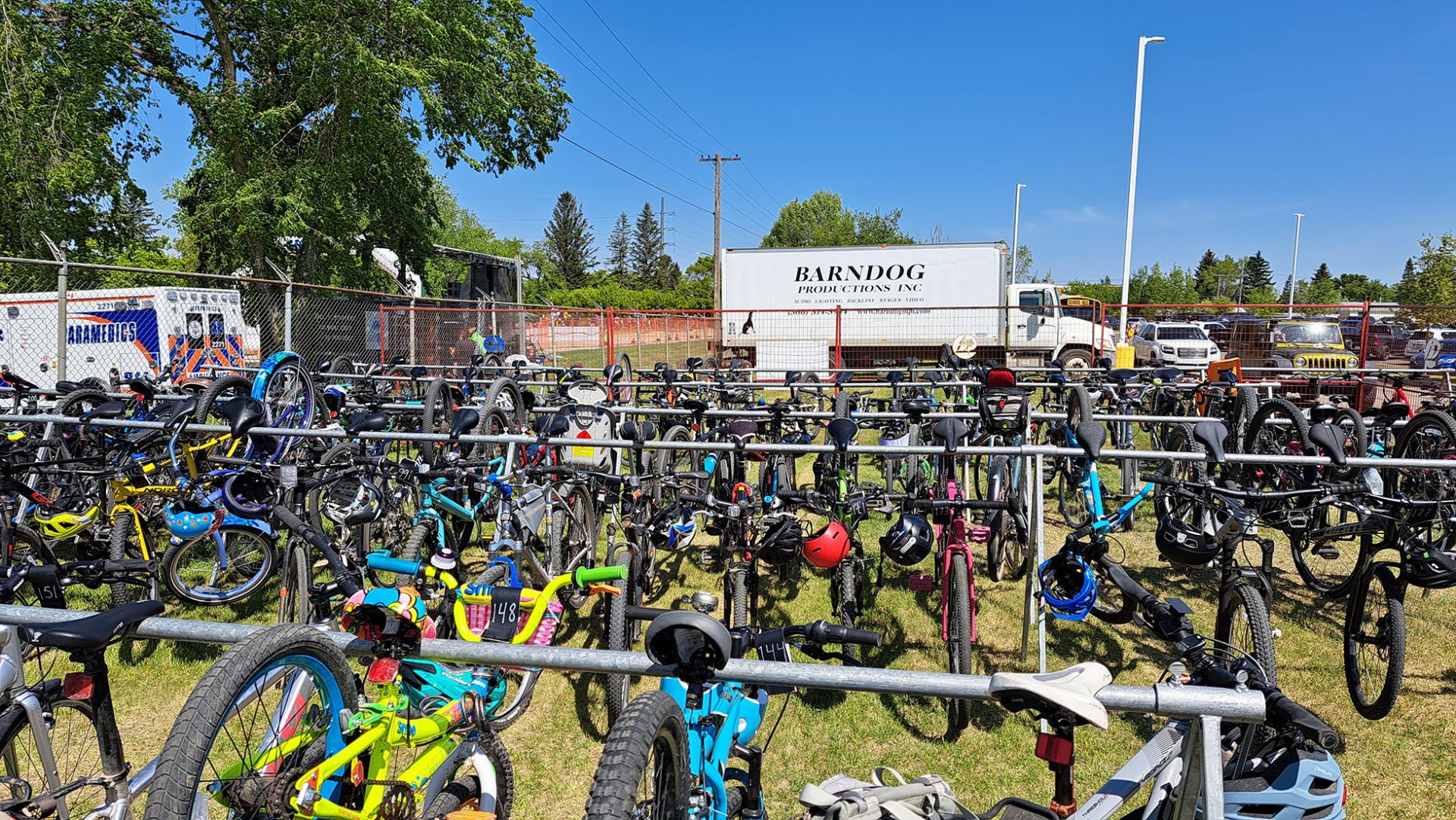
The Saskatoon Cycles Bike Valet is fully in swing for 2025, and on its way toward a BIG year of parking bikes!
So far this year we’ve been at eight (8) venues (compared to 3 at this time last year) and have hosted around 50% more bicycles! By the numbers:
- Venues = 8
- Shifts = 55
- Total volunteer hours = 110
- Bike parked = 712
July is lining up to be another very busy month for events (and bicycling to events) and we’re very excited to see how many trips we can accommodate!
The role played by volunteers cannot be overstated; they are the lifeblood of making this service professional and effective. We offer a HUGE thank you to everyone who has taken on a shift or two, and invite anyone who hasn’t already to join the team. Shifts are two hours, but go by so fast. Many people stay later and keep parking bikes because it really can be addictive! And, if you haven’t volunteered yet, you’ll get a nifty new blue comfortable shirt for your efforts.
We have some fun venues coming up soon, and we’re always looking for folks to help out. Check out these upcoming shift opportunities:
2025.07.01 :: Canada Day
2025.07.5-12 :: Saskatoon Jazz Festival
2025.07.50-2025.09.6 – Saturdays on Broadway
or click here to visit our Bike Valet page for the whole schedule.
Thanks again to our volunteers, our venue hosts for contracting us, and the City of Saskatoon for supporting the valet.

RIP 23rd Street Bike Lanes
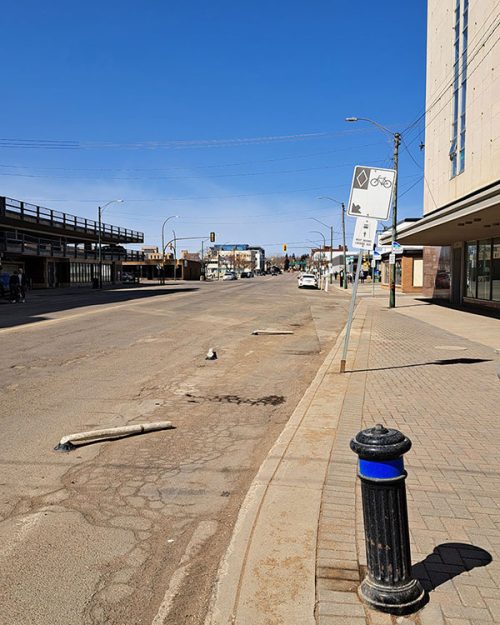
Saskatoon’s complicated relationship with the 23rd Street bike lane “demonstration project” has come to an end, with council voting 8-3 on Wednesday, June 25, 2025 to remove the residual infrastructure on the street.
The “protected” lanes had seen years of neglect and were often noted to be counterproductive due to damaged posts blocking the lane, fading paint providing little direction to motorists, and crumbling road surface that often collected dirt and snow.
Still, we felt the spirit of the project had promise. Saskatoon Cycles had recommended temporary rapid deployment infrastructure be installed along 23rd to maintain a safer corridor through the downtown in lieu of placement of permanent installations via the future 23rd Street Greenway construction. We felt that re-usable concrete barriers or planters would not only be cost-effective and quick to install, but would finally provide actual safety to cyclists navigating through the downtown core until the Greenway is built.
We are disappointed with this decision, but acknowledge that a) planning still moves forward toward permanent, more multi-use mobility corridors in the downtown, and b) city administration has unlocked the concept of rapid deployment in the city and continues to seek priority areas to target. If demand grows for a downtown connector lane, it could move a street like 23rd higher on the list.
Our thanks to administration for their fair consultation, those who wrote letters of support, and to council for their consideration.
June Events
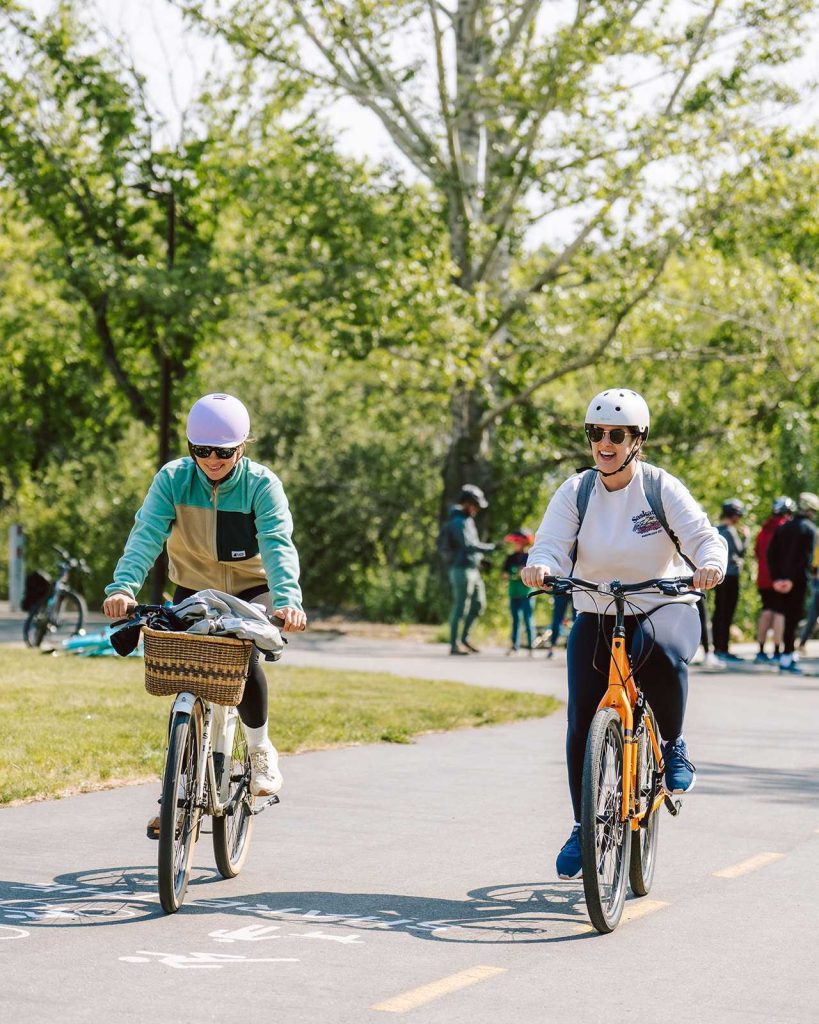

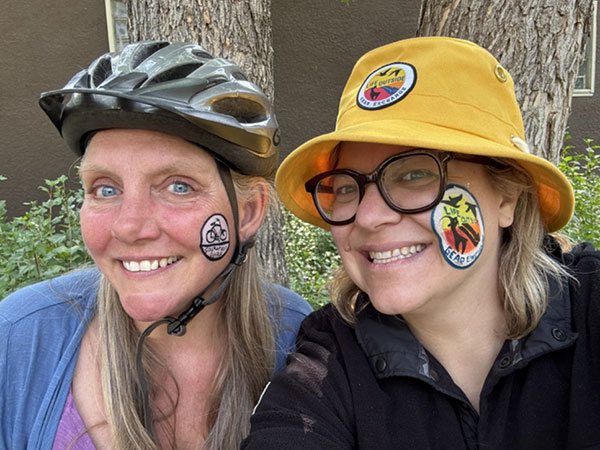
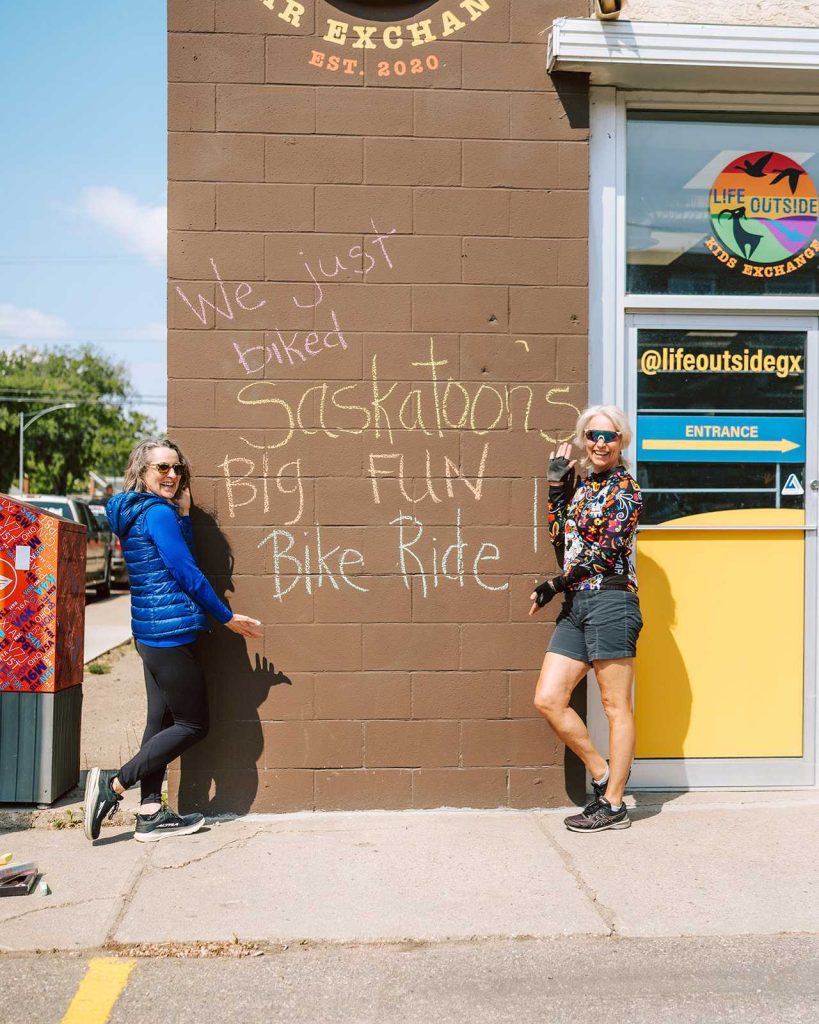
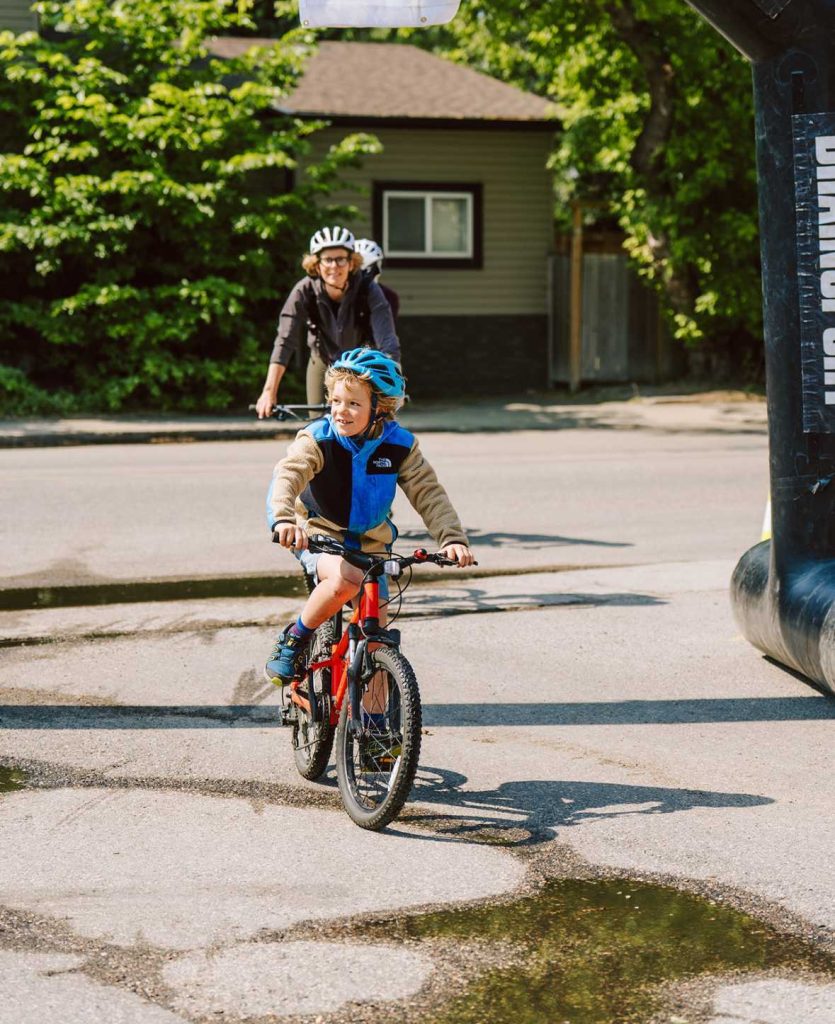
June saw some memorable cycling events.
1st Annual Saskatoon’s Big Fun Bike Ride
On June 8th, Life Outside Gear Exchange hosted its 1st Annual Saskatoon’s Big Fun Bike Ride, with owner Nancy Broten promoting a day for “celebrating the joy of cycling, being outside, and community”.
The ride was an unqualified success, with over 100 participants of all ages taking part in the route of their choice, complete with fun challenges on a clear sunny day. The Saskatoon Cycles Bike Valet and Tune-Up Tent were in attendance, providing free safe parking and quick repairs.
Please check out this link for even more vibrant photos from the event. And stay tuned for next year’s ride!
2nd Annual Ride for Your Life
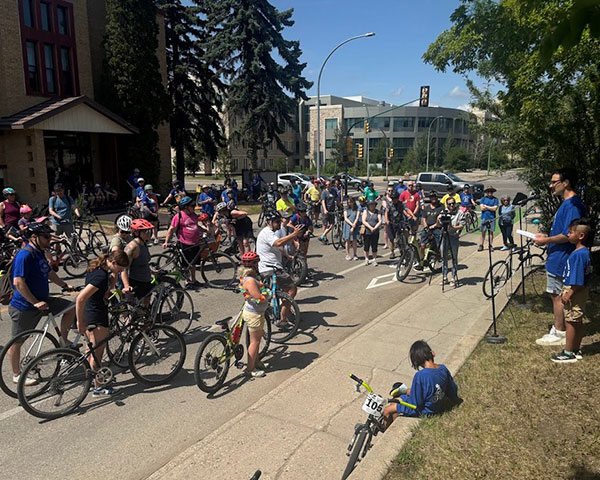
On June 15th, the 2nd Annual Ride for Your Life took place to remember those killed while riding their bikes in Saskatoon and to demand better awareness and safer urban design to prevent future tragedy. Over 100 cyclists joined the ride as part of their Father’s Day to support the rally.
Tod Fox, who started the ride last year in memory of his wife Natasha, spoke to the media about the value of the event. “It brings people together and tells politicians and policymakers that this is important. We’re here to tell you that lives are at stake.”
Joining Mr. Fox in speaking this year was Saskatoon mayor Cynthia Block and Gordon Holtslander, board chair of Saskatoon Cycles (which assumed the event’s organizing this year).
After the ride that traveled lengths of Wiggins Ave, Main Street, Broadway, 12th Street, and Clarence Ave, attendees gathered in President Murray Park. The Saskatchewan Prevention Institute provided safety literature and information, Pebl Goods sold shirts, a representative of the Saskatoon Police Service bike patrol spoke to cycling safety, and the Saskatoon Cycles Tune-Up Tent was there to fix up any needy bicycles.
You can read the CTV article HERE.
Our sincere thanks go out to everyone involved in the Big Fun Bike Ride and Ride for Your Life. We look forward to the return of both events in 2026 as part of the neverending movement to make Saskatoon a more bike-friendly city.
Snapshot of France
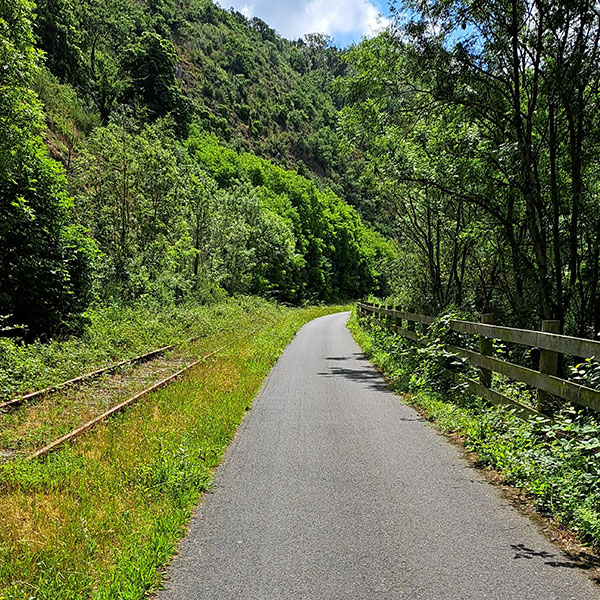
by Jason Hanson
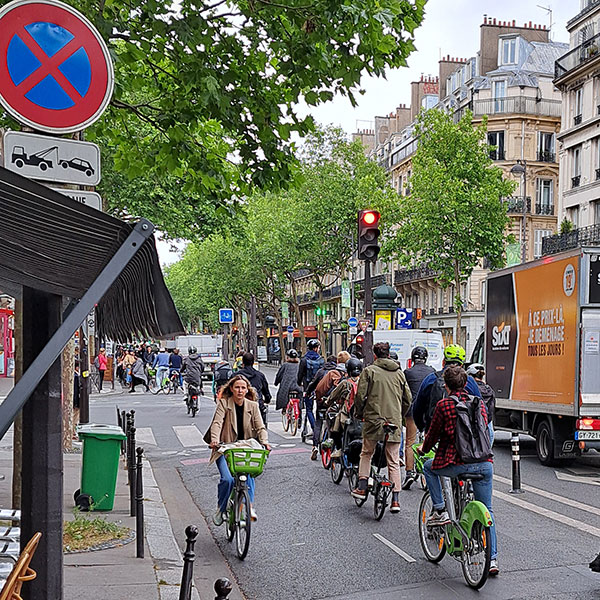
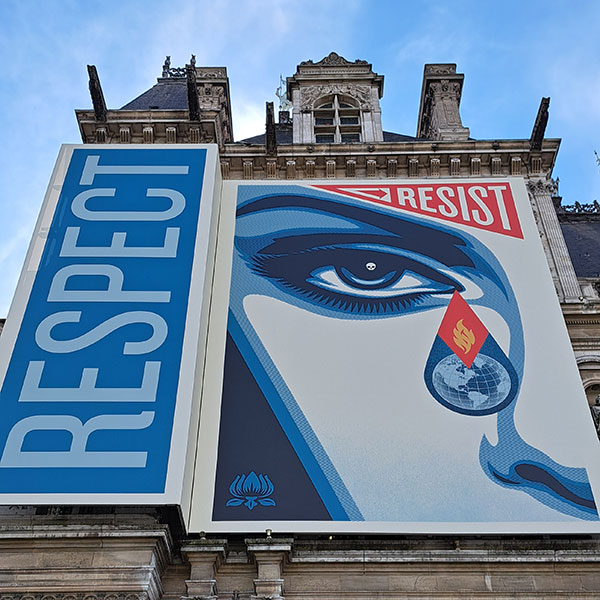
My recent visit to Paris and Caen in France was not a cycling-specific holiday, but it was impossible to not appreciate the different attitudes and amenities for active transportation while I was there.
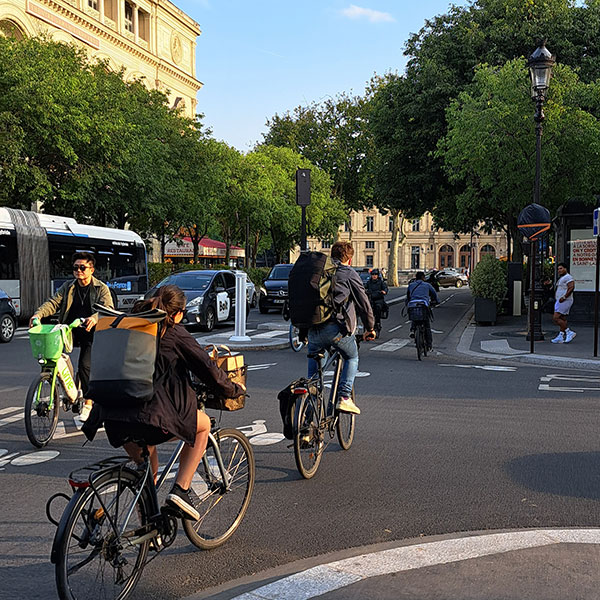
The number of people cycling in Paris surprised me. I had heard that the mayor Anne Hidalgo had radically transformed the city during and after the pandemic, opening up many streets previously limited to motorists, but I hadn’t expected such a high percentage of “mode share” by cyclists. It was heavy and steady. My wife confirmed the change; this had not been the case seven years ago when she had last visited, she assured me. Lesson #1: change can happen quickly under the right circumstances.
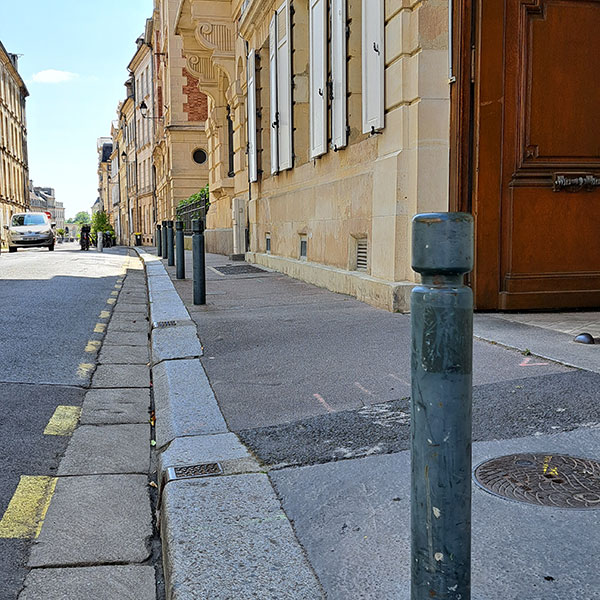
Was the traffic calm in Paris? No. Were there many separated bike lanes? Not where I was. Did everyone follow the rules of the road? Not even close. It felt somewhat chaotic to me, and would not have been my “best practice” model for how to design infrastructure or safety manuals. But there was a sense of overarching mutual respect for the different vehicles using the streets; overall speeds were lower, bollards were everywhere, people were often waved through or accommodated where possible, and things flowed remarkably well. I noted the relatively low number of honks. Lesson #2: change doesn’t have to be perfect to work.
Caen was celebrating its 1000th year anniversary while we were there. Bike traffic was closer to Saskatoon’s, but the smaller city boasted kilometers of amazing greenways (think: a Meewasin to Martensville) that connected neighboring towns (we rode on separated infrastructure almost all the way to Juno Beach).
The Romans claimed their version of Paris in 52BC, so can claim a history twice as long as Caen. The stones that make up the streets of these cities, or cover the even older structures underneath, could tell many stories of mistakes made, atrocities committed, loves and lives birthed and buried. In short, these places have had a lot of time to experiment with different ways of being. They’ve had practice at getting things right and wrong. In comparison, Saskatoon is a chronological infant, barely opening its eyes to possibilities. Lesson #3: be gracious with any ideas of “progress”.
I already miss the lively and busy streets of Caen and Paris and their diversity of transportation. I know Saskatoon isn’t Paris (or really even a prairie version of it), and we can’t be expected to mimic a dense city of 2 million people, but these places provided very workable models of what “could be”, with very modest adjustments. Vive le velo!!
Cycling Data

From the Broken Record Department: Have we mentioned how vital it is for city planners and advocates to have robust data to help lay the groundwork for better cycling in Saskatoon?
Of course we have! We will again! And onward and upward we go!
One of the ongoing pieces we need help with is the gathering of information that indicates how much cycling is happening and where our bikes are taking us. You can pitch in by sharing your biking routes and experiences through a couple of apps that aggregates this data and keeps it anonymous.
1. Install Strava on your phone and track every ride or walk you take.
You only need a free account. And if you already use a tracking app, check to see if it has a Strava integration. There are more than 100 apps that Strava connects with.
Strava anonymizes the data from all users in an area and creates the Strava heatmap. Images from these heatmaps can be a powerful visual to show that there are cyclists and walkers using the streets all over Saskatoon (like this presentation on Circle Drive on Ave C). But we need as many cyclists as possible to be using this system!
2. Bookmark Bikemaps.org
Then report every time you have a cycling crash, a near-miss, see a cycling hazard, or have your bike stolen. This is NOT instead of calling an ambulance or the police. Absolutely do that first if it’s needed!!
Bikemaps.org is a system that aims to catch as many as possible of the almost 70% of all cycling incidents or near misses that don’t get reported officially.


Donate

Want to help support the voice for Saskatoon cyclists?
Your donations give us the resources to press toward a Saskatoon where cycling is a viable, year-round mode of transportation that is safe, convenient, and comfortable for all ages.
We want families to be able to simply hop on their bikes to go grab an ice cream and enjoy the beauty of Saskatoon. For you or your partner to pick up groceries or a library book. And we really want you to be able to commute to work and back safely and conveniently.
Your donation helps us work on these three ‘pillars’ of cycling development for Saskatoon:
- Infrastructure – A safe, convenient, comfortable and well maintained cycling network throughout the city that allows cyclists to go from every neighbourhood to key destinations
- Ridership – Educate, encourage, and promote cycling so more people choose bicycles as a convenient and safe transportation option year round.
- Culture – Educate, encourage, and promote diversity in ridership with respectful inclusion of all modes of transportation.